Our history
Nearly 200 years on The Green
The Baptist church in Blackmore traces its origins to 1828, when Ashley Barrett invited James Castleden (1778–1854), a well known Baptist preacher, to preach in the village.
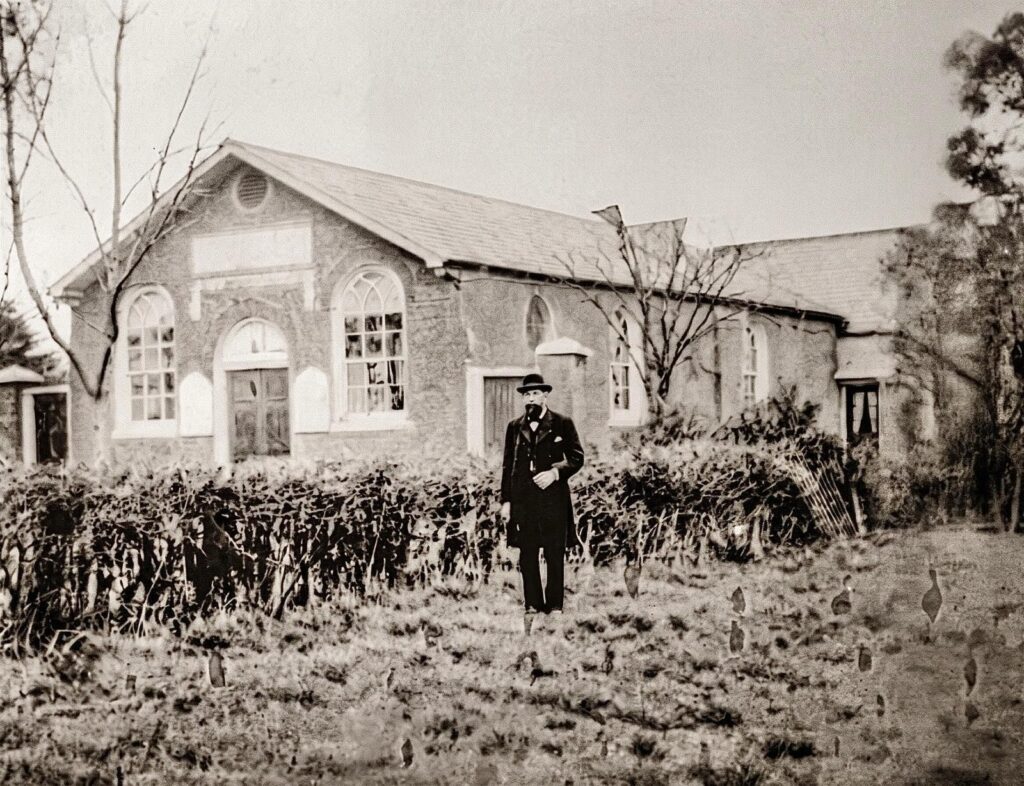
1828James Castleden preaches in Blackmore
1841The chapel and infant school are built
1850William Trotman becomes pastor
1878The school becomes a Sunday school
1983Rebuilding work begins
1998The restored church is complete
The founder
Ashley Barrett
Ashley Barrett (1783–1870) was the elder of two sons of Ashley Barrett (1754–1830) and Martha Vittou, who were married in Blackmore in 1777. The Barrett family had been in Blackmore a long time, and Ashley was a popular name, used for at least six generations of the family. They seem to have been yeomen, tenant farmers rather than landowners, and probably living as comfortable a life as anyone in the village other than the lord of the manor.
Ashley, though, did not stay in Blackmore. He set himself up as a corn merchant in Southwark, and later ran a steam-powered corn mill in Bermondsey. Here, he would have had contacts with other entrepreneurs, who were very often non-conformist in their religion.
Ashley’s mother Martha Vittou may also have had an important influence on her son’s religious views. Her family were Huguenots, Protestants driven from their homes during the French wars of religion. The Huguenots were Calvinist, not always entirely comfortable with the Anglican liturgy, but closer to many Baptists. Ashley Barrett seems to have joined the Strict Baptists. These believe in the literal truth of the Bible as God’s word, and insist on the baptism of believing adults.
1828 to 1843
The early years
For about nine years after James Castleden’s visit, the meetings continued in a house in the village, led by a resident pastor. We know that the earliest pastors were Mr Sangster, Mr King and Mr Padmore, but few details of these have survived. From about 1837 to 1843 meetings continued under the leadership of Ashley Barrett, and it was at this time that the church itself was built.
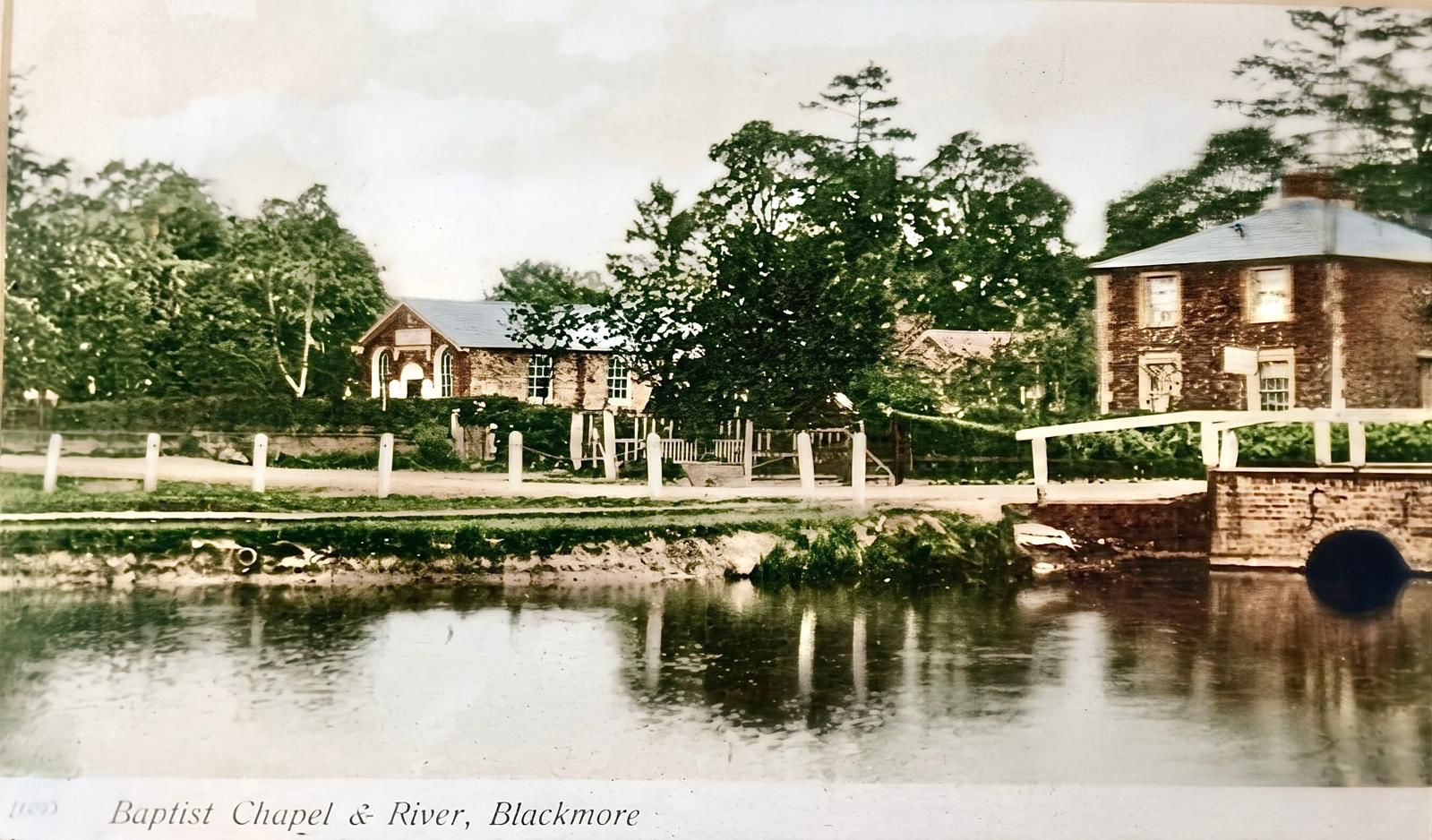
An early postcard: “Baptist Chapel & River, Blackmore”.
1841
A chapel on The Green
In 1841, Ashley Barrett of Jessops took a lease on about ¾ acre of land called Pitmans on the northern side of the village green from Charles George Parker, lord of the manor of Fingrith, and built a Baptist chapel and infant school there. Houses for the pastor and the schoolmaster were built on the land between the chapel and the village pond.
In 1843 Ashley Barrett bought the freehold. He also bought a 2 acre field to the north of Pitmans, called Blackmore Mead. These lands, with a generous cash fund, formed the endowment of the church.
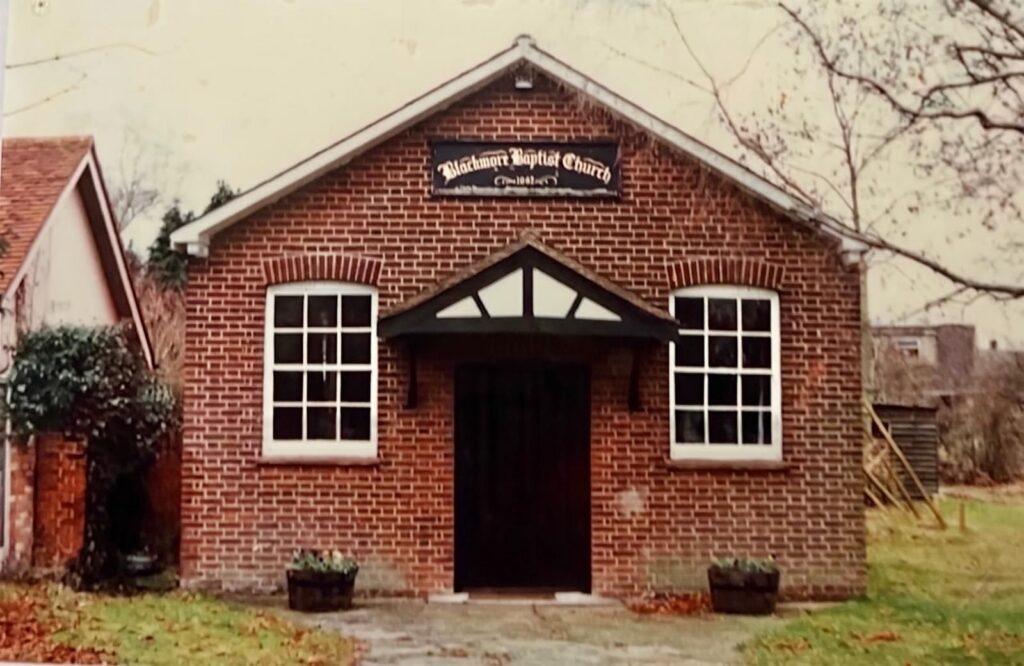
The church
Saving the building
The church building itself, between the front vestibule and the two-storey section to the rear, is still the original structure. But by 1970 structural problems were evident in the cottage behind the church. A chimney had fallen, and the cottage condemned. There were structural problems in the main building, and it was clear that fairly major renovation work would be necessary if the church was to be able to continue. It was even suggested that it would be better to sell the land, and rebuild on a new site, as the rebuilding would make the church unusable for significant periods of time.
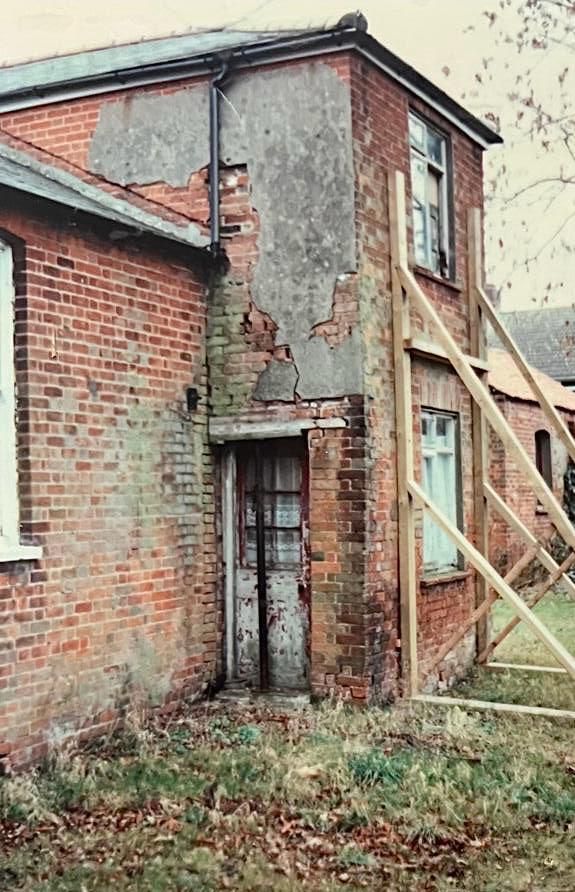
Reconstruction eventually started in 1983, with the replacement of the church roof. The problem of how to continue holding services was solved: the vicar of Blackmore, Monty Knott, invited the Baptist group to use the parish church.
As well as the new roof, a new baptistry was built, a new front vestibule was added in 1997 and the rear section, which was formerly a caretaker’s cottage, was rebuilt to serve as kitchen, toilets and an office. Over a 15 year period £130,000 was spent on these works, but by 1998 the church was structurally sound, a much better building for its purpose and had a more welcoming frontage.
Some of this money came from the sale of land in the original endowment. Blackmore Mead was subject to compulsory purchase by Ongar Council in 1946. A small estate of 8 houses was developed on the 2 acre field, and the name Blackmore Mead was retained; but the compensation to the church was only £500.
Then in 1969 the houses between the chapel and the pond were sold, demolished, and replaced by three modern houses (later, a fourth was added). Help also came from Ford of Britain in 1997, to provide a modern disabled toilet, and the Friends of Essex Churches contributed to the restoration costs.
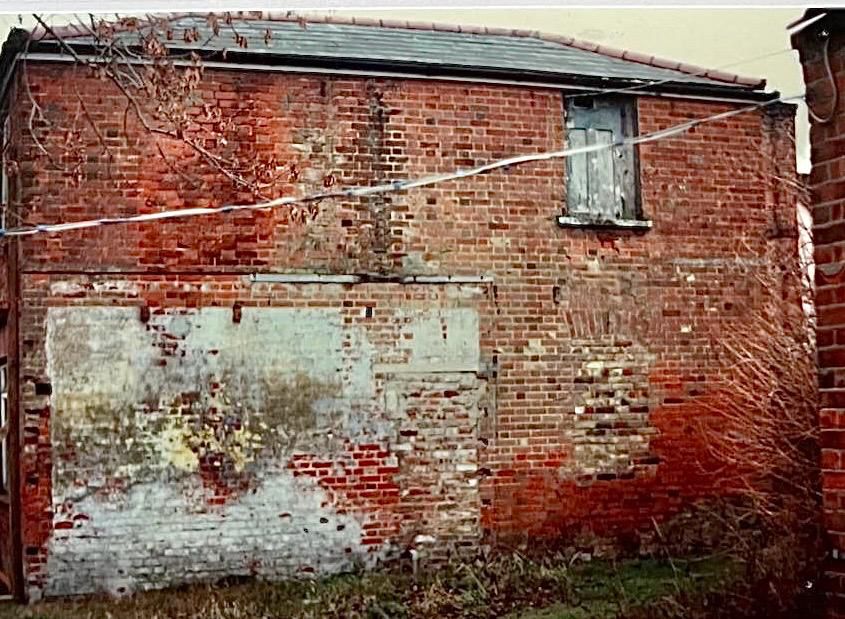
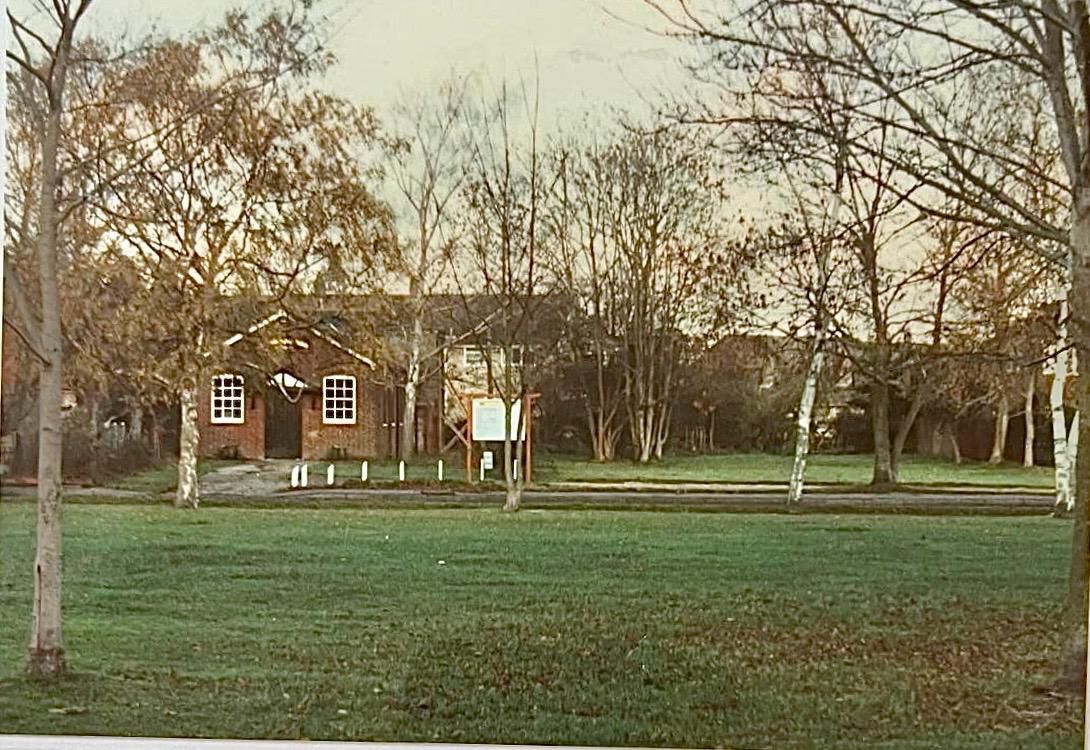
The church seen across The Green.
The school
A school for the village
This was not the first school in the village: a new school house in Church Street is mentioned in 1825, and this was still active in 1859. But the Baptist school probably was unique in offering a basic education to the children of the agricultural labourers who made up most of the population of the village. A Sunday school was also established, almost certainly the first in the village.
Pennies
The village schools
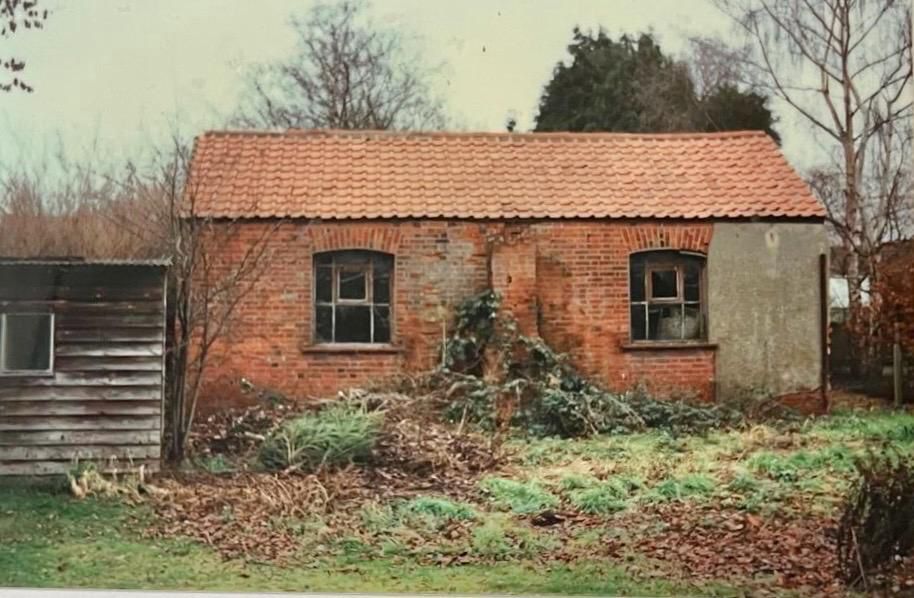
Pennies, the old Baptist school room, before restoration.
The canons of Blackmore Priory ran a school in the village before the reformation. There are occasional references in the succeeding centuries, which suggest that some teaching continued.
By the 19th century there seems to have been more than one school in the village. A new school house is mentioned in 1825; this seems to be “the Old Manor House” in Church Street. In 1841 until sometime after 1851 Miss Elizabeth Gray ran a ladies school there. She died in 1855, but in 1859 Miss Sarah Newell ran a day school, possibly at the same address. In 1862 there was also a dame school, mistress Sarah Brewster, and she was still in this role in 1874.
About the time that he had the Baptist Chapel built, Ashley Barrett set up an infants’ school there, providing a third village school. This was the school at which George Alexander and his wife taught. In the 1847 tithe award George Alexander lived in Chapel House. In Kelly’s for 1845, Mrs Elizabeth Alexander was mistress of an infants’ school. But in 1851 Emma Cordwell occupied Chapel House, and was the infant school teacher. In the same year George Alexander had moved (possibly to Hope Cottage), and his son was working as a blacksmith. In 1859 the mistress of the Baptist School was Martha Nash, and in 1863 Ellen Manser.
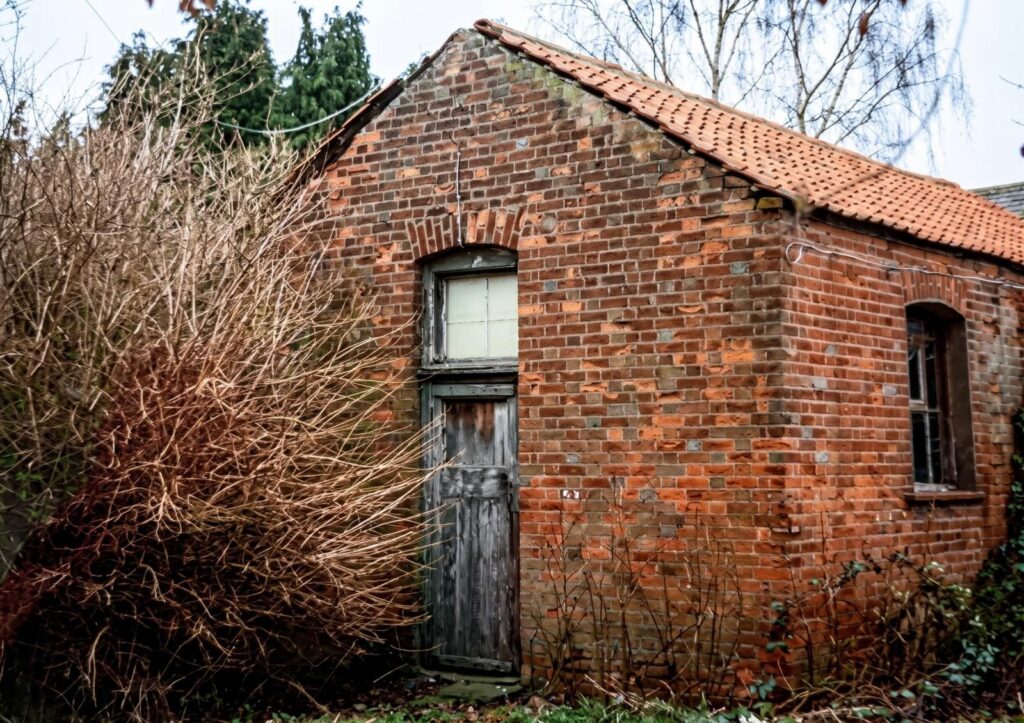
Pennies, before restoration
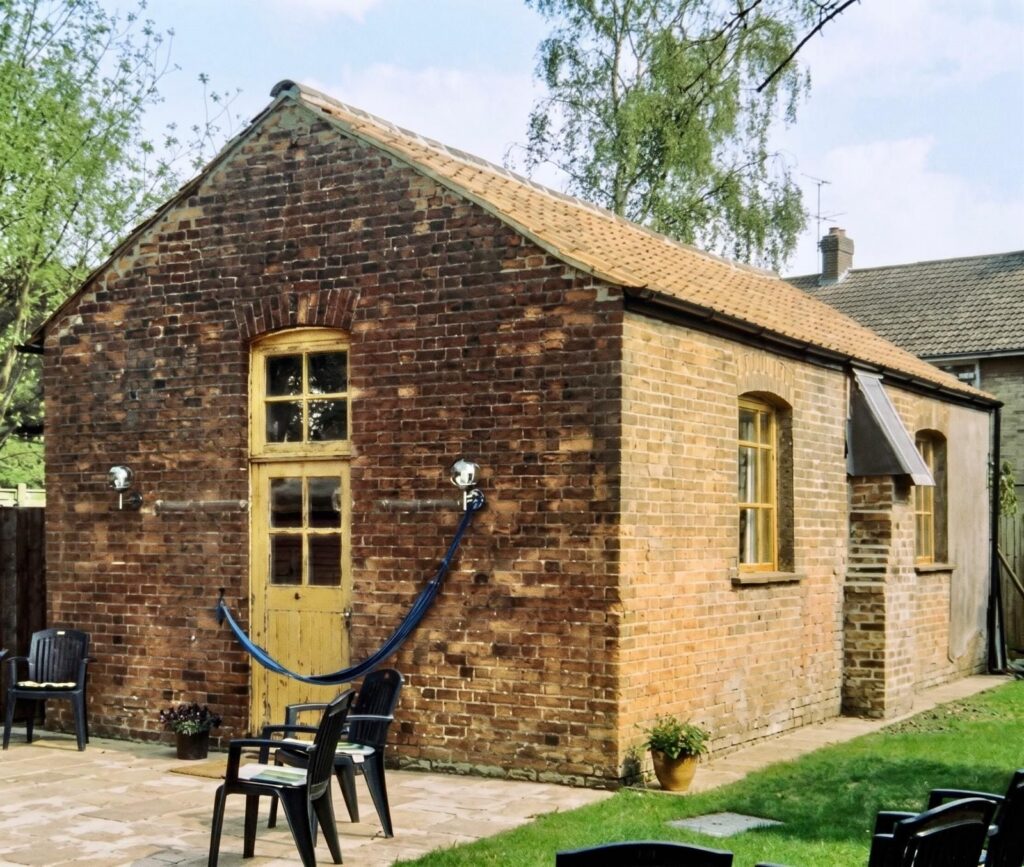
Pennies today
The first edition of the Ordnance Survey map shows the Baptist school as a British School. This seems to have been a precursor of the Board schools, set up under the Elementary Education Act 1870 for elementary education free from Anglican doctrine. But by 1878 the only school listed is a mixed Board School, mistress Ada Rachel Taylor. This was the building, now a house, at the junction of the Brentwood Road. The 1882 directory notes that this school was opened in 1878 for 120 children, and the 1898 directory gives the cost of building as £565. There were three staff, Benjamin Thomas Hood, Mrs Hood and Miss M R Walker (infants), and an average attendance of 102 children.
The opening of the Board School made the others redundant. The Baptist school continued as a Sunday school only.
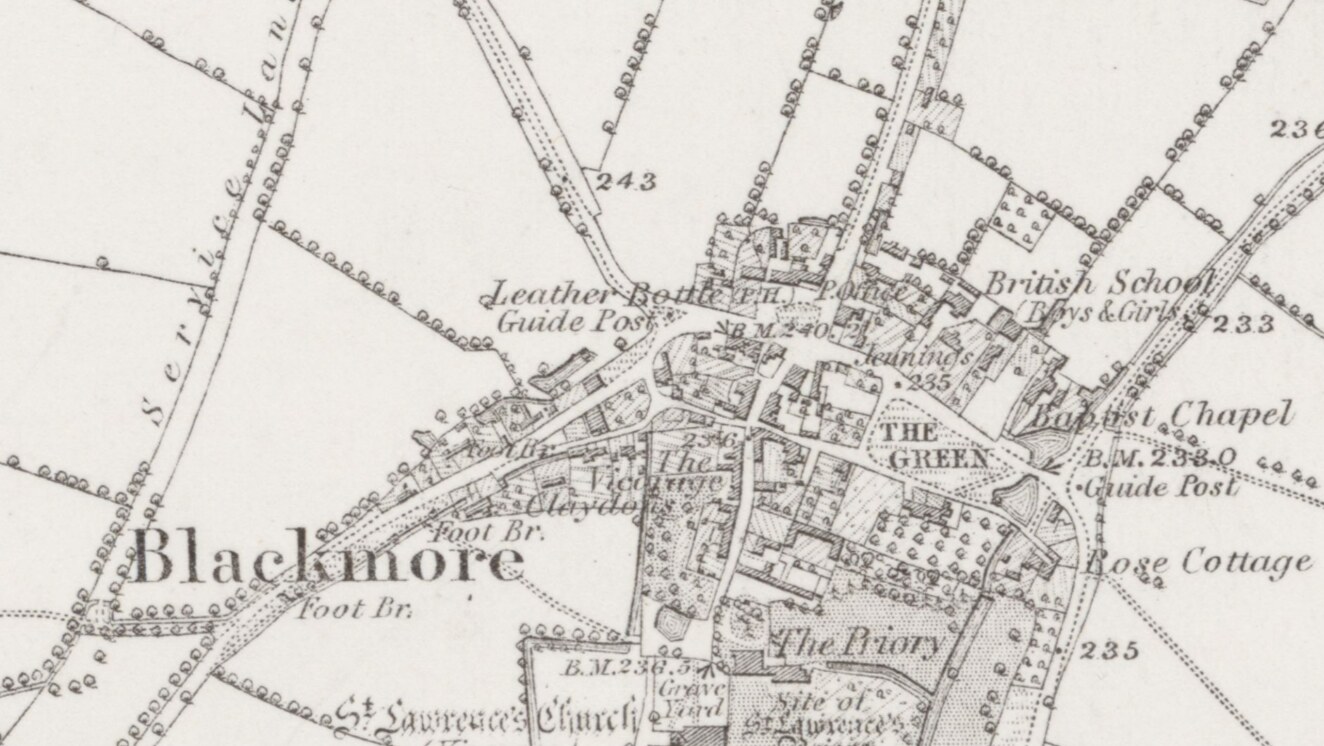
The first edition Ordnance Survey map of Blackmore, 1881, showing the British School and the Baptist Chapel beside The Green.
Pennies is available to rent for local community activities. Find out about hiring Pennies.
Victorian schools
Schooling as it used to be
Discipline in a Victorian school was strict, and most schoolmasters kept a cane. It was a thin stick, usually less than a metre long, often with a curved or crooked handle. Some were bamboo or rattan; birch canes were often kept in water so they stayed pliable. It was not unusual for senior pupils to cane younger ones too.
Boys were generally caned on the hands or the bottom, and girls on the hands or the backs of the legs. The schoolmaster chose the hand a child wrote with and gave three or six strokes across the fingers, with extra strokes if the hand was pulled away. At some schools, such as Eton, a pupil might be given the birch instead: a bundle of thin birch twigs bound together like the head of a besom broom.
A caning at school could easily lead to another punishment at home, so few children owned up to one. The cane stayed in use in British schools long after Victorian times, though less often in later years, and corporal punishment finally ended in the late 1980s.
Ministers and pastors
Serving the village
The first pastor after the construction of the church was William Trotman (1826–1906). He came to Blackmore in 1850, and served as pastor for 24 years. In 1854 he married Mary Barrett, Ashley Barrett’s niece, and they had a family of 4 children. Over a period of 24 years, he successfully established the Baptist church as a permanent feature of the village. In particular, his success with the school was remarkable.
But by the time he left the village he could see his life’s work on this school unravelling. In 1877 a School Board was set up for Blackmore under the Elementary Education Act 1870. His letter to the local paper makes the point that none of the members of the Board were Baptists, or had any experience of the existing school. In the upshot, a new school, controlled by the local land owners, was built, and the Baptist school became a Sunday school only.
A later pastor, Henry Fletcher, went to court for non-payment of the education rate of 1s 2d. He explained that this was a matter of religious principle, as he believed that the schools were teaching Roman Catholicism. He probably had a point: Board schools were supposed to be non-denominational, but were probably heavily influenced by Anglican beliefs. From a Baptist perspective, these were very close to Catholicism.
Since William Trotman, there have been a succession of pastors, who have served the local Baptist community.

Come and
join us.
We extend a warm invitation to you to join us at our Sunday morning services every week at 11am.
The Green, BlackmoreEssex CM4 0RT